
So,
And the practice of the S’s

So what do we do when the end comes? When the knowledge that the bounty found in simply sitting and communing, consuming the divine offerings meets the fact it’s gone. No more digesting the delights once offered at your special place. No more smiling at the salivations miso aubergine would elicit. The restaurant ‘So’ has closed.
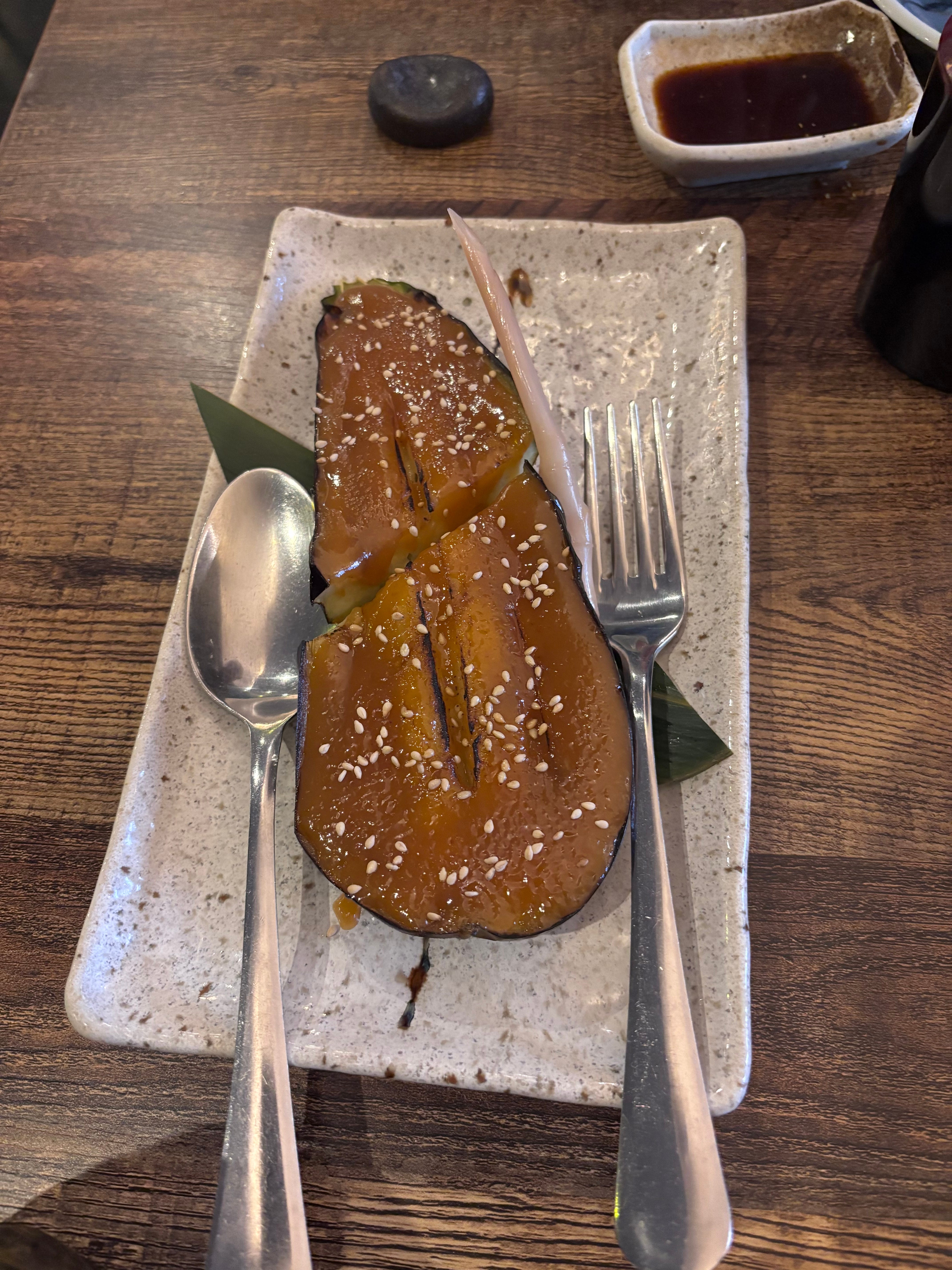
‘So’ was a space in which moments of wonder were guaranteed. Even though I knew the food was incredible, every time I’d still be stunned into silence at the first mouthful. And interestingly, in my most recent and final visit, I timed my body’s response to the food. I found that it took five, and sometimes eight seconds or longer for my senses to draw back from the flood of information coming from my mouth. I immediately drew parallels to my practice, where the S’s usually require five to twelve seconds digestion time. This is the time it takes for my nervous system to release its rigid attachment to a thought, image, or emotion.
So yes, my favourite restaurant has now closed. Yet the talent of the chef will live on in a new venue, with new food and clientele to delight with his dishes. The warmth of the host, whose smiles permeated through the place like sunshine, illuminating diners and staff alike, will continue to enrich all the lives she crosses. The energy of So lives on, even if the venue no longer exists.
Obviously, energy lives on, even when its current form dissolves. But more interesting to me is how the impulse, the original shape of the energy, can remain within us. Especially if we manage to contain it. Certain people, events, experiences (and food) stay with me whether I wish them to or not, and when these memories arise, especially transformational ones, I am reminded of moments in which I knew I was left changed.
Instances of unplanned wild thoughts and memories seem most common during sitting practice. Perhaps it’s the internal space which allows the mind to bring them up, or perhaps they are drawn from outside my field of awareness, like animals drawn into quiet public spaces during lockdown. Whatever the reason, I see them as less of a sign of a noisy mind, and more that my internal space is quiet enough to allow them to arise. In their arising there’s no dismissal. For their presence simply needs digesting, for just like the miso aubergine, each mouthful requires deliberate attention until its delight has slipped away to feed my belly, body and being.
So, what are the S’s and how do we savour them? They are:
See, where you Simply See whatever comes up in the spaces of you. (By using the word ‘Simple’, I draw attention to Seeing with as little judgement or opinion as possible.) Next you Soften, which simply means you allow tensions to leave any of the soft parts of your body. This includes your mouth, tongue, throat, belly, pelvis and pelvic floor. Having Softened, you Smile, which requires you to lift the back of your tongue against the backs of your teeth. Yes, it’s an inner Smile meaning the smile doesn’t even need to show on your face. When you get used to this, you’ll feel your nervous system release, or discharge unnecessary tensions trapped within it, and this can last anywhere between 5-12 seconds. Once you’ve settled from this, simply start again.
Savouring the stages of the ‘S’s’, just as I and the many other patrons of So savoured the miso aubergine, helps to regain all the goodness within the undigested events stored inside. Getting more release from your nervous system means less stress, and what’s not great about getting rid of unwanted stress! For there is So much undigested energy in your nervous system, dormant, waiting to offer its nourishment. Even if ‘So’ is closed, my
desire for amazing food its visits imprinted still lives on. As does my memory of the place, the welcoming smile of its host, and the salivatory silence inducing food.
(I know ‘salivatory’ isn’t yet a common word, but when you machinate together ‘celebratory’ and ‘salivate’, “salivatory” is what you get, so it’s staying in).
So, to sum up for your homework assignment, things don’t die; the energy just fills up alternative forms of life. But more than this, for those of us still alive after the end of something or someone we love, the energy of it still lives on, providing us with continuing possibilities to see how we were, are, and will be left changed.
#1 By the way, the S’s are totally drawn from and in spired by the six R’s from the teachings of Bhante Vimalaramsi. The following description is from the TWIM website:
Recognise the distraction or tension.
Release the unwholesome thought or feeling.
Relax the body, especially the areas of tightness.
Re-smile—a gentle smile on the lips, in the eyes, and from the heart.
Return to the meditation object.
Repeat as needed with kindness and patience.
During a diligent and deeply explorative year of practicing these daily R’s, I found myself changing the word cues to words beginning with ‘S’. I find See, Simply See, Soften and Smile leave me less in my head and more in my body, making the ‘S’s’ easier to actualise and embody. Hence they stuck, and have remained a friendly, useful, and effective constant companion for the last few years. And since it’s easier to teach what you truly know, I share this. But for those inclined to, please do look at Bhante Vimalaramsi, his TWIM jhana practice which contain these the six ‘R’s’, and the excellent accompanying book by Delson Armstrong is a brilliant way to help you dive as deep as you wish to go.
Your homework is to simply take some time to not only give the S’s a go, but to savour them. For each one has a different flavour and response within you. I will write and say this again, in the hope that the repetition sinks in, that each of the stages of the S’s has a distinct flavour to savour. So, I wish you a happy tasting practice, and a video helping you will follow shortly.